history & quality
DIECKMANN & HANSEN
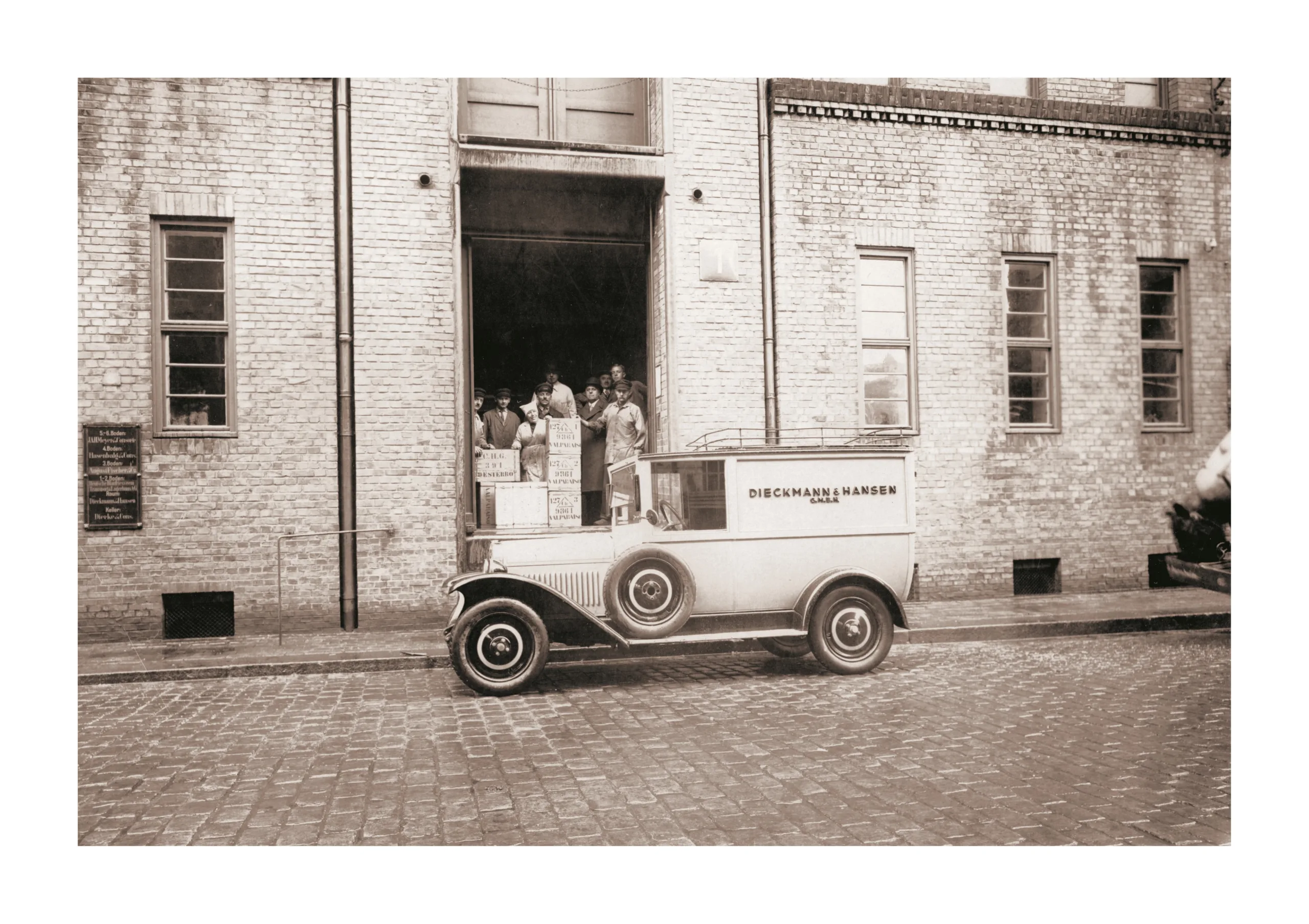
DIECKMANN & HANSEN – Historical foundation
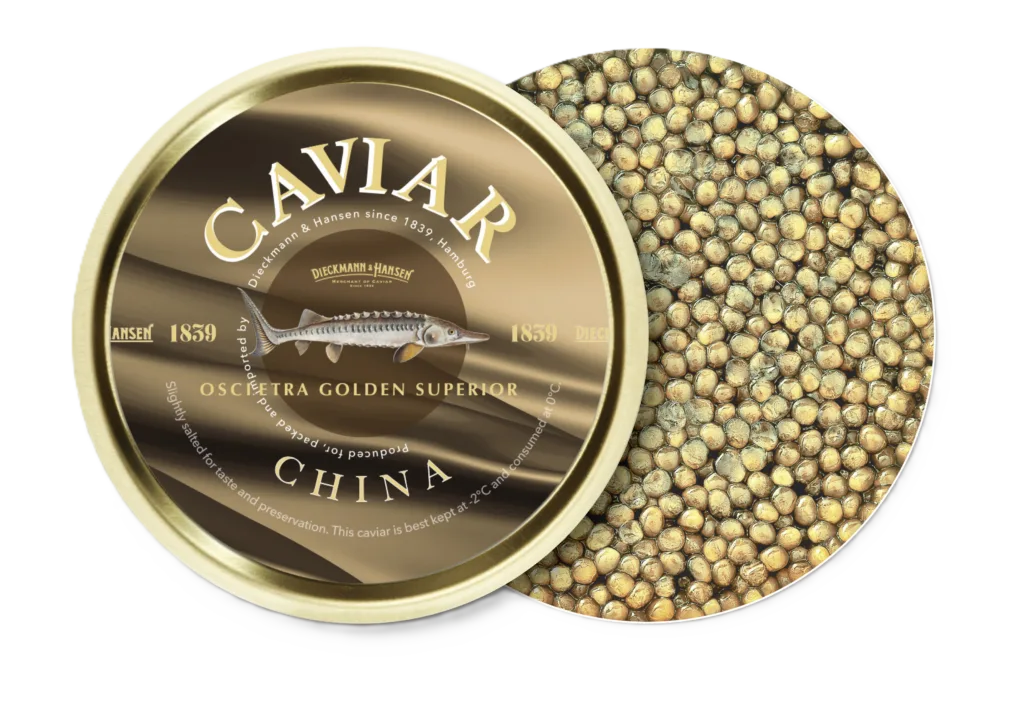
Dieckmann & Hansen was founded in 1839 in Hamburg with a focus on caviar trade and production. The company started as a fish salting facility in Altona and quickly developed into a caviar trading business, first locally and later internationally.
Development and position
Over generations, the company has worked with sturgeon and caviar with a focus on origin, quality, and handling. Despite wars and changes in the market, Dieckmann & Hansen has maintained its position.
Pioneer phase
In 1895, the company established a station at the Amur River in Siberia and later a larger base in Astrakhan at the Caspian Sea. From here, caviar was produced and sent to Hamburg and further out into the world.
Branches were opened in several European cities, and in 1911 the Romanoff Caviar Company was established in New York.
Hamburg as a base
The location in Hamburg provided direct access to the port and international trade routes. The work was centered around purchasing, storage, and distribution of caviar with a focus on quality and stable delivery.
Periods of crisis
The company was affected by both the First and Second World Wars as well as political changes in Russia. During the Second World War, warehouses and buildings were destroyed.
After 1945, the company was rebuilt, and in 1954 activities were resumed in Hamburg.
Reconstruction and growth
In the 1960s and 1970s, the company once again traded 20–25 tons of caviar annually. At the same time, there was access to raw materials from both the Soviet Union and Iran.
New facilities were established and international operations were managed from Barsbüttel.
Challenges and regulation
Declining sturgeon stocks and increased regulation changed the market. In 1998, sturgeon were placed under international protection, and in 1999 activities were temporarily stopped following EU decisions.
Return and production
In 2003, trade was resumed. Subsequently, investments were made in own production based on aquaculture.
Since 2011, caviar has once again been produced in Hamburg in collaboration with Desietra Holding.
Application in the kitchen
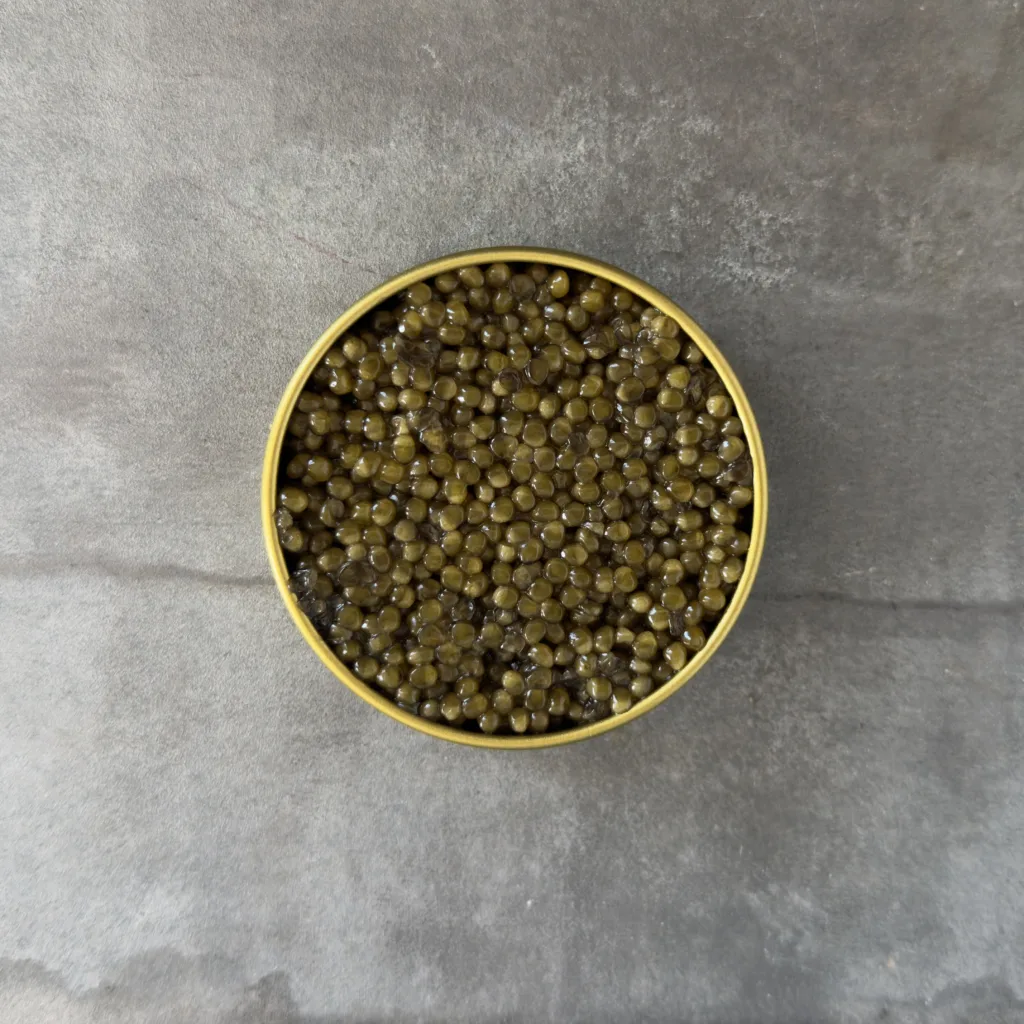
Caviar is a raw material product where quality, origin, and handling are essential. It is used both classically and in modern dishes, where texture and flavor play a central role.
Future and direction
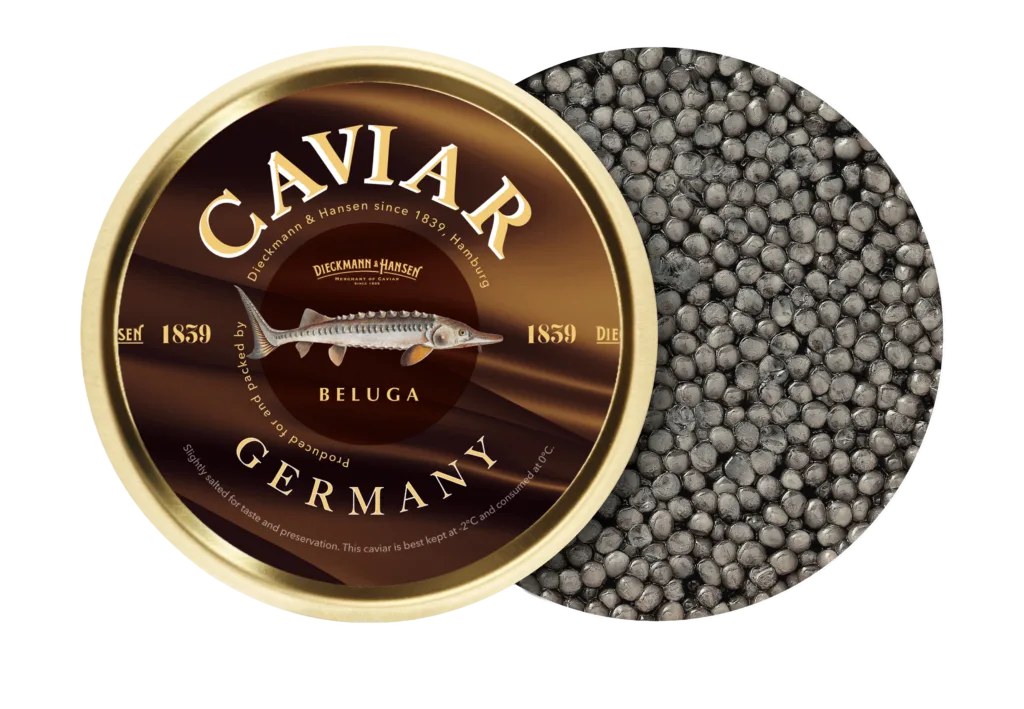
Today, the focus is on sustainability, traceability, and consistent quality. Raw materials come from several countries and are finished through salting and maturation.
The company works with both physical sales and modern distribution channels.
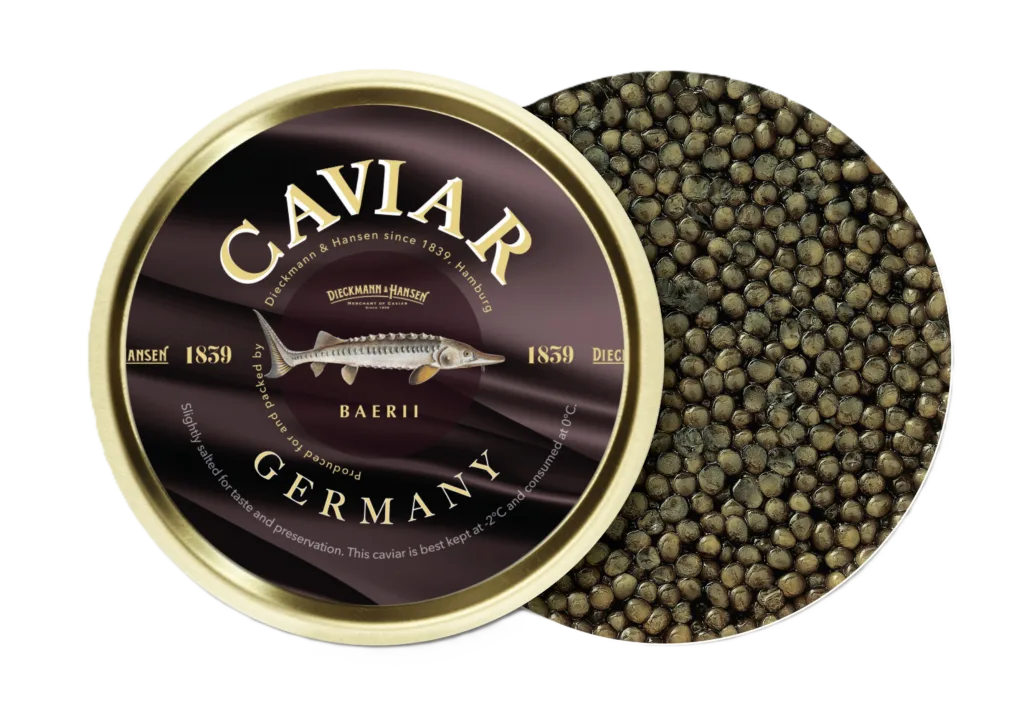
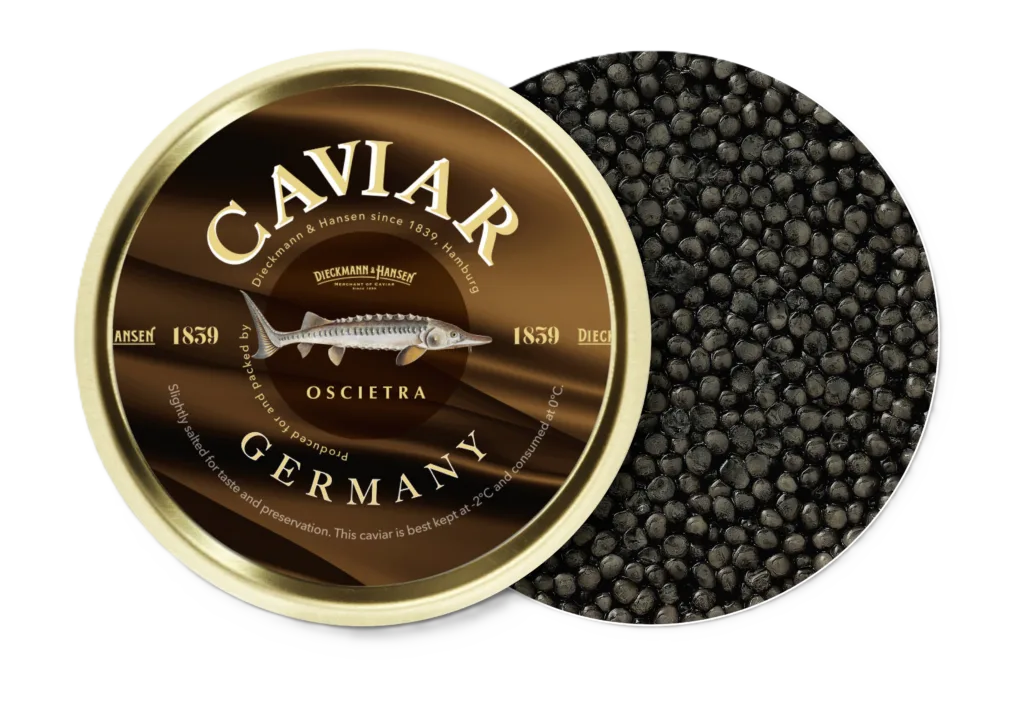
Explore the selection from
DIECKMANN & HANSEN
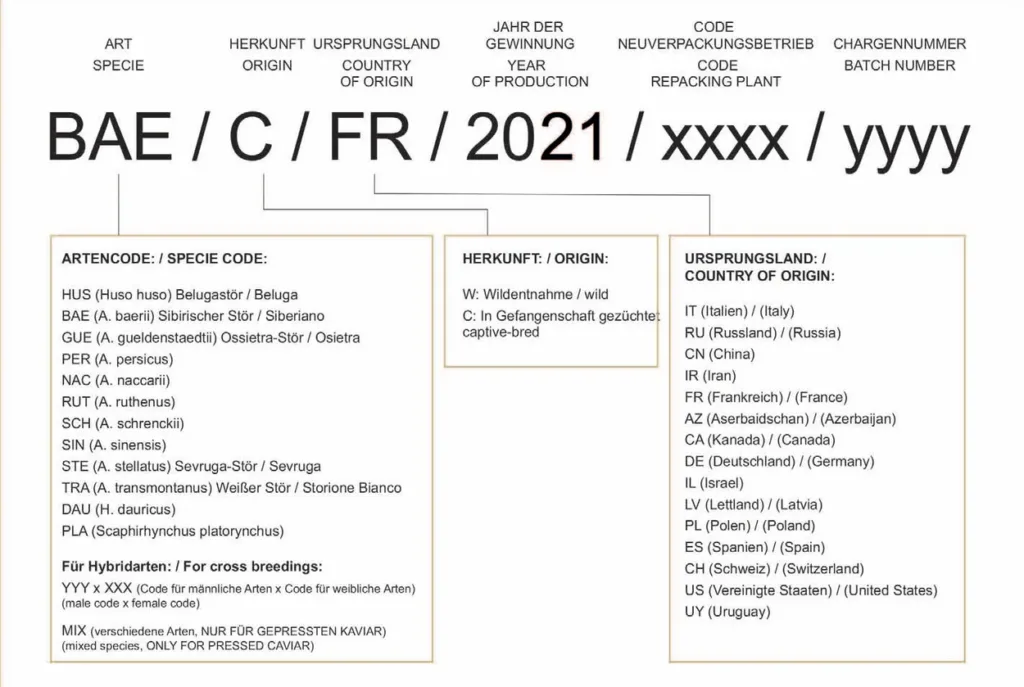
Understand the caviar label